

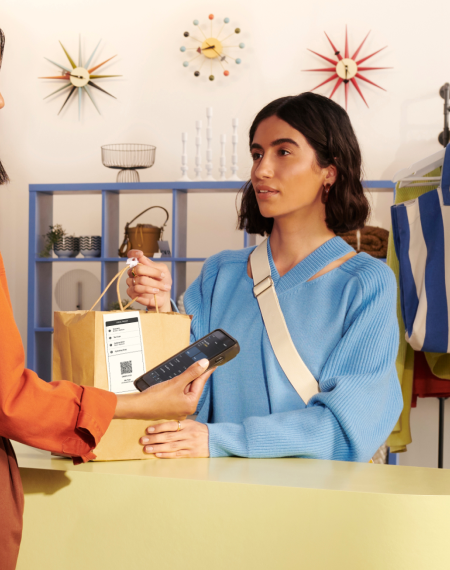


An apparel POS system is retail software that processes transactions and tracks clothing inventory across stores and ecommerce channels. Matrix inventory groups every size and color variation under one product, making large assortments easier to manage.
US clothing and accessories stores recorded $320.2 billion in sales in 2025. Apparel brands compete across a huge market, but disconnected systems create stock errors and fragmented customer data.
This guide explains how to choose an apparel POS system that unifies online and store operations. It covers essential features and vendor questions for businesses opening their first store or expanding to new locations.
5 best apparel POS systems
Apparel POS platforms vary in inventory depth, omnichannel tools, and cost. Use this table to compare the five POS companies ideal use case, entry price, and strongest apparel inventory feature.
| POS system | Best for | Starting price | Apparel inventory highlight |
|---|---|---|---|
| Shopify | Unified online and store sales | $29/month with POS Lite | Size and color variant tracking |
| Lightspeed Retail | Complex inventory and supplier management | $89/month, billed annually | Cross-channel stock and supplier catalogs |
| Square for Retail | Small apparel stores | Free plan available | Auto SKUs and low-stock alerts |
| PayPal Point of Sale | PayPal-first sellers | No monthly software fee | Product variants and stock alerts |
| Clover | Boutiques wanting flexible hardware | Varies by hardware and plan | Variant SKUs and inventory syncing |
Shopify POS Pro costs an additional $89 per location each month. Prices exclude payment processing, POS hardware, add-ons, and taxes.
1. Shopify
Best for: Apparel brands selling online and in stores
Shopify POS shares its product catalog and inventory data with Shopify ecommerce. Customer profiles and orders also stay in the same admin. Apparel brands using the platform include Gymshark and Good American.
Shopify POS Lite is included with paid Shopify plans. It covers in-person payments, customer profiles, and returns at the original purchase location. Shopify POS Pro adds advanced inventory tools, staff permissions, retail reports, and cross-location returns. Stores can upgrade individual locations to customize based on the needs of each store.
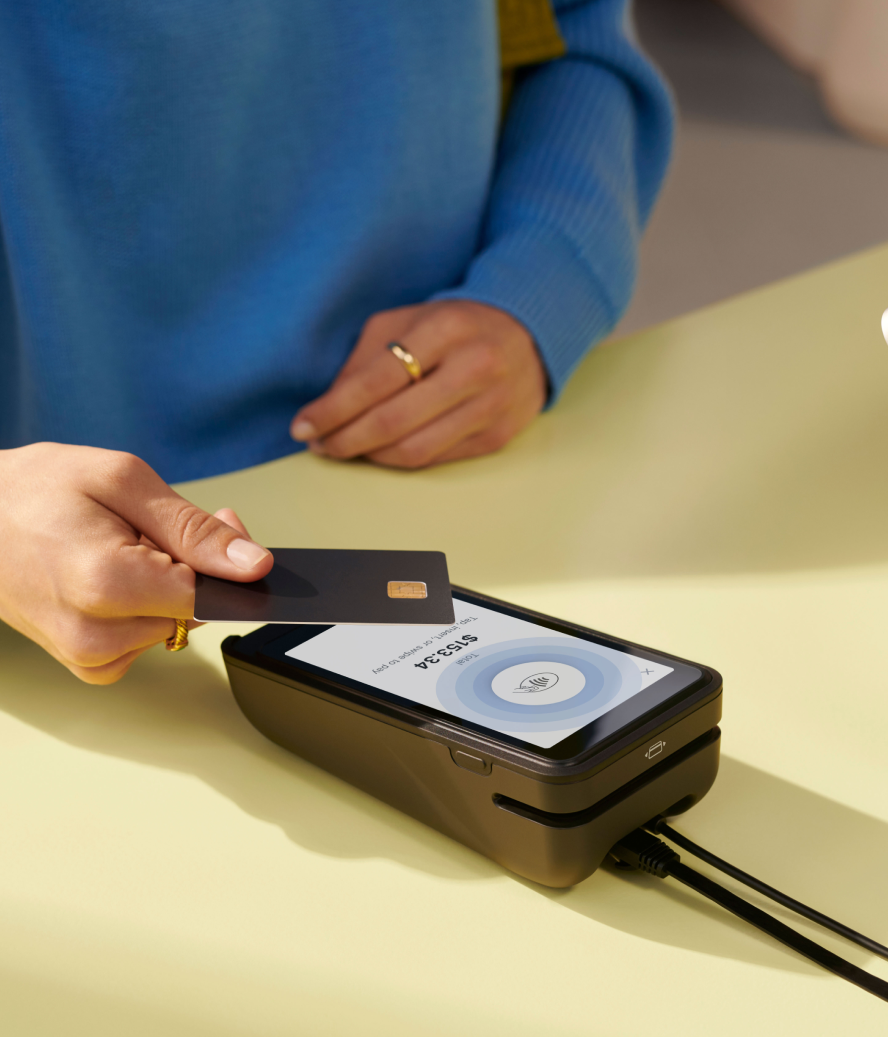
For countertop checkout, Shopify POS Terminal has a dedicated payment terminal with a customer-facing display. Store staff can also accept contactless payments through Tap to Pay on iPhone or Android.
Best features:
- Unified online and store inventory
- Size and color product variants
- Cross-channel customer profiles
- Omnichannel returns with POS Pro
- Inventory transfers with POS Pro
- Staff permissions with POS Pro
- POS Terminal customer display
- Tap to Pay on mobile
“With Shopify, there is so much money and development effort saved,” says Edwin Portillo, VP of technology at Good American. The brand uses Shopify POS to keep their retail and ecommerce operations on the same platform.
Pricing: Shopify Basic starts at $29 per month when billed annually. Shopify POS Lite is included. POS Pro costs an additional $89 per month for each location. Shopify Payments rates vary by plan, market, and card type.
2. Lightspeed Retail
Best for: Apparel retailers with complex purchasing
Lightspeed Retail has inventory, purchasing, ecommerce, and payment tools for apparel stores. They can group size and color variants under one product and track stock across stores and online channels.
Its supplier tools also manage cross-channel apparel stock. Lightspeed Wholesale provides access to supplier catalogs, and its NuORDER tools can import product data and sync purchase orders with the POS.
Features:
- Size and color variants
- Cross-channel inventory management
- Multilocation stock visibility
- Supplier catalog access
- Purchase order syncing
- Built-in ecommerce
- Real-time retail reports
Pricing: The Basic plan starts at $89 per month when billed annually and includes one register. Core costs $149 per month, and Plus costs $289. Lightspeed notes that prices and additional service fees can vary.
3. Square for Retail
Best for: Smaller apparel stores seeking low costs
Square for Retail offers a free POS plan with payment processing and basic retail features. Its inventory tools cover SKU creation, stock alerts, and barcode labels. Paid plans add functions such as inventory counts, purchase orders, stock transfers, and cross-location returns.
Square Online shares its catalog with the POS. Clothing stores can offer shipping, store pickup, and local delivery from the same product data.
Features:
- Automatic SKU creation
- Low-stock alerts
- Barcode label printing
- Inventory counts and transfers
- Vendor and purchase orders
- Store pickup and local delivery
- Tap to Pay
Pricing: Square Free has no monthly subscription fee and charges 2.6% plus 15¢ for card-present payments. Square Plus costs $49 per location each month, and Premium costs $149. Plus and Premium offer lower in-person processing rates.
4. PayPal Point of Sale
Best for: Mobile sellers using PayPal
PayPal Point of Sale, formerly PayPal Zettle, provides a mobile POS system, card reader, and standalone terminal. Its software tracks products, sends low-stock notifications, and provides sales reports for individual locations.
Retailers can accept contactless payments through the PayPal Card Reader, PayPal Terminal, or Tap to Pay. Funds from eligible sales typically appear in the merchant’s PayPal balance within minutes.
Features:
- No monthly software fee
- Product and inventory tracking
- Low-stock notifications
- Location-level sales reports
- Customer loyalty vouchers
- Tap to Pay
Pricing: PayPal charges no monthly or setup fee. Card-present transactions cost 2.29% plus 9¢. The first Card Reader costs $29 for eligible new business users, and additional readers cost $79. The PayPal Terminal costs $199 or $239 with a barcode scanner.
5. Clover
Best for: Boutiques seeking bundled POS hardware
Clover’s POS offers hardware and software packages for clothing stores. Its apparel inventory tools provide customizable SKU variants, low-stock alerts, and barcode scanning. Retail Growth plans can also sync online and in-store sales from one dashboard.
Clover has several POS device configurations. Station Duo pairs a merchant screen with a customer-facing display, and Clover Flex adds handheld checkout.
Features:
- Customizable apparel SKUs
- Low-stock alerts
- Online inventory syncing
- Customer loyalty tools
- Employee permissions
- Countertop and handheld hardware
Pricing: Clover retail pricing is based on the selected hardware bundle, software plan, and processing agreement. Clover has Basic, Standard, and Advanced retail packages. Some promotional hardware offers carry a three-year contract.
Apparel POS features
When choosing an apparel POS system, compare each feature against your sales model and growth plans.
Brands with stores and a direct-to-consumer (DTC) site benefit from one inventory view across channels. If wholesale is part of the mix, a unified platform can coordinate retail, DTC, and B2B orders in one system. That reduces manual reconciliation as sales grow.
Sales channel integration
Today’s consumers expect to shop with their favorite brands across retail stores, ecommerce sites, and social storefronts. A 2025 DHL survey of 24,000 online shoppers found 70% had already purchased through social media. Check that your POS system integrates with the channels you use so product, order, and inventory data stay current.
Unified commerce takes this a step further by simplifying the back-end operations of an omnichannel business. When inventory, customer, and sales data come from the same commerce platform, you can:
- Sync product data—such as pricing, imagery, and product descriptions—to every sales channel
- Manage orders from a single order management system (OMS)
- Offer omnichannel returns and exchanges regardless of where the order was placed
Real-time inventory sync also helps prevent overselling when the same size and color is listed on several channels. A study commissioned by Shopify found Shopify POS delivered 22% lower total cost of ownership on average than major global POS competitors.

Centralized data and CRM
Centralized customer data gives store staff the same context collected online. Shopify POS lets staff create customer profiles when shoppers share their email addresses or phone numbers. Data collected through Shopify, such as order history, feeds into the same profile. Compatible app integrations can add more customer details.
Sales associates can reference this data to personalize the in-store experience. For example, an associate could see that a shopper usually buys size 10 and recently viewed a yellow dress. The associate can then recommend an in-stock option in that size.
Targeted discounts and loyalty programs
Loyalty programs give customers a reason to keep shopping with your store. This repeat business can reduce reliance on new customer campaigns. In a 2026 Deloitte study, 72% of consumers said loyalty programs made them more likely to spend with a preferred brand, and 56% said the program directly increased their spending.
Check that your POS system has loyalty integrations that work across every sales channel. Shopify POS does not include built-in loyalty tools, but apps such as Smile let customers earn points and redeem rewards on online and in-person purchases.
Shopify’s POS UI integrations let cashiers tap a loyalty program tile on the Smart Grid to award or redeem points during in-store purchases.

Flexible checkout options
Speedy checkout helps you serve more customers in less time. It also matters to the customer experience: Shoppers may not return if checkout is clunky or their preferred payment method is unavailable.
Shopify POS lets customers pay for orders using:
- Cash
- Credit and debit cards
- Apple Pay and Google Pay
- Shop Pay Installments for eligible stores
- Loyalty rewards from integrated POS loyalty apps
- Gift cards and store credit
This flexibility also applies to returns and exchanges. Fashion has one of the highest ecommerce return rates, so check that your apparel POS system can process omnichannel returns. A customer who bought an item online should be able to return it in store, and vice versa.
“We adopted Shopify for what it does best: the smooth processing of orders, exchanges, and returns, as well as its efficient payment process,” says Benjamin Mateo, chief revenue officer at Asphalte.
Endless aisles
Apparel brands stock multiple variations of the same product. Whether it’s different sizes, colors, or styles, it’s not always feasible to have every variation available for customers to take home.
An endless aisle treats your apparel store as a showroom. Customers can browse the catalog and try on clothing in person. Staff can then use the POS system to ship an item from another fulfillment location, such as a nearby store or warehouse.
Multiple fulfillment methods
Check whether the POS can manage multiple fulfillment methods from the same order system. Customers may want to collect an online order in store or have an in-store purchase shipped home.
The fulfillment method options available with Shopify POS are:
- Buy online, pick up in store (BOPIS). Manage and fulfill pickup orders directly from Shopify POS.
- Ship to customer. Shopify POS Pro lets staff ship in-store purchases to customers’ homes. Shopify assigns the fulfillment location using your configured routing rules.
- Outsourced fulfillment. The Shopify Fulfillment Network gives eligible businesses access to Flexport, which stocks and fulfills orders.
Apparel brand Vestique uses physical stores as fulfillment centers for online orders. After moving to Shopify POS, the apparel brand recorded 18% year-over-year sales growth. They also opened three stores in one year.
Real-time inventory updates
Apparel inventory gets complex as size and color options multiply. Matrix inventory is the grid of size and color combinations for one style. A shirt in five colors and six sizes creates 30 SKUs, all of which must be tracked separately.
Look for real-time inventory tracking across every storage and sales location. Empty shelves lead to lost sales. Overstocking ties up cash and can force markdowns.
Shopify’s built-in inventory management features let stores:
- Track and adjust stock by location
- Count inventory with barcode scans
- Fulfill and receive inventory transfers
- Create purchase orders for suppliers
- Review sell-through and inventory reports
User-friendly, customizable POS interface
A long feature list matters little if staff struggle to use it. Check for a clean interface that is easy to train staff on.
Shopify, for example, has a customizable Smart Grid. Retailers can add shortcuts for frequently used products and actions. POS UI integrations also bring app functions into the checkout screen so cashiers can complete orders faster.
“To get a store fully operational on Shopify and to have Shopify POS on every device takes less than a day,” says Tyler Muzzy, director of retail at BYLT Basics.
Role-based permissions and tracking
An apparel POS system contains business and customer data that should not be available to every employee. Role-based permissions limit sensitive tasks to staff with the right access.
If you reward retail staff with commissions, check that the POS can attribute sales to individual employees. Shopify POS Pro gives employees unique PIN-protected logins and assigned roles.
The system records staff sales attribution, making performance and commission tracking easier.
Set custom discounts and returns to “approval required” so a manager must enter their PIN before staff complete the action.

Apparel POS case studies
Learn how apparel brands are using unified POS systems to connect with customers and sell more.
Mizzen+Main
Menswear retailer Mizzen+Main has been an omnichannel brand since their inception. Yet the logistics of operating an omnichannel retail business became a challenge. Their retail stores had a smaller footprint than traditional stores, which limited the inventory they could hold. The team needed real-time access to accurate inventory data.
Customers shopping for a gift also had limited knowledge on the clothing the brand sold. It’s critical for sales associates to offer their product knowledge and guide gift-givers toward a purchase by way of a personalized recommendation.
With Shopify, Mizzen+Main could create unified customer profiles to offer personalized shopping experiences.
“We open a customer’s profile and can see their full purchase history, which helps us make the right recommendations,” says Store Manager Trey Pritchard.
The apparel brand’s newfound ability to unify inventory data also lets retail staff check inventory levels at nearby stores. If one SKU is unavailable to take home same-day, cashiers can use ship-to-home to have it shipped directly from the brand’s warehouse to a customer’s home address.
Since switching to Shopify, Mizzen+Main has seen incredible results: Retail revenue grew 27% year over year, while online revenue grew 15%.
Good American
Inclusive denim brand Good American started out as a digital-native brand. In a bid to strengthen relationships with customers and offer branded experiences, they expanded into physical retail with the help of Shopify.
Good American integrated Shopify with NetSuite ERP, streamlining inventory and sales tracking.
“Retail relies a lot on the existing systems of the business,” says Edwin Portillo, VP of technology at Good American. “We needed to ensure that bringing on this new sales channel wouldn’t interrupt what we already had in place and that we had all the hardware to support the purchases, inventory transfers, and returns.”
Since opening the doors to their first retail location, Good American has seen measured high levels of customer satisfaction—averaging a 91.69 Net Promoter Score (NPS) in stores. In-store return rates were 20% lower than their ecommerce return rates. They also have enhanced operational visibility through their ERP integration and multichannel attribution capabilities.
Kenny Flowers
After nearly a decade as an online-only apparel brand, Kenny Flowers expanded into physical retail with the help of Shopify POS.
“When a customer comes into the store, it’s either the beginning of a new customer journey or an exciting touchpoint for existing customers,” says founder Kenny Haisfield. “We needed a system that could support both scenarios seamlessly, while also helping us manage the seasonal nature of our business.”
A loyalty program underpins the resort wear brand’s strategy by encouraging customers to shop year-round. The expansion into retail needed to be seamless: Customers must be able to earn and redeem loyalty points wherever they shop.
The speedy implementation of Shopify enabled Kenny Flowers to offer these omnichannel experiences.
“When an Island Society member visits the store, their online account is linked automatically,” says Kenny. “This gives them access to their benefits and makes it easy to make exchanges or returns, whether they bought online or in-store.”
Since expanding their loyalty program in retail, Kenny Flowers experienced 75% year-over-year growth of in-store sales. Some 80% of in-store orders come from new customers, and the personalized approach has helped the apparel brand gain up to an additional 20% total revenue through their flagship store.
Apparel POS system FAQ
What is an apparel POS system, and how is it different from a retail POS?
An apparel POS system is a retail POS configured for clothing sales. It processes payments and tracks inventory by style, size, and color through matrix inventory. A general retail POS may not offer the same variant depth, omnichannel returns, or cross-channel stock controls.
What is the best POS system for clothing stores?
For clothing stores that sell online and in person, Shopify POS is the strongest overall option. It keeps orders, inventory, and customer profiles in one platform. Shopify POS Pro adds staff roles and inventory tools, plus cross-location returns and omnichannel workflows for permanent retail locations.
How much does an apparel POS system cost?
Apparel POS software can range from $0 to several hundred dollars per month. Shopify Basic costs $39 monthly, or $29 per month with annual billing, and includes POS Lite. POS Pro adds $89 per retail location each month. Payment processing and hardware cost extra.
Which POS system has no monthly fee?
Two options offer plans with no monthly software fee:
- Square for Retail
- PayPal Point of Sale
Both charge transaction fees, and hardware costs extra.
What POS software do fashion and clothing stores use?
Fashion and clothing stores commonly use:
- Shopify POS
- Lightspeed Retail
- Square for Retail
- PayPal Point of Sale
- Clover
Compare how each platform manages product variants and cross-channel inventory. Also review return workflows, staff controls, and total cost. Shopify POS is designed for brands that want ecommerce and in-store retail in one platform.

